29 August 2013

THE MORE IT GOES (TIDDLY POM) ON GROWING...

Apologies for the flippant title of this post (and apologies to Winnie-the-Pooh for misquoting his little ditty). Perhaps I've run out of earnest ways to feed back on scan reports showing yet more of the same.

So yes, unfortunately, the latest scans showed some more growth, both in the liver and with a few more spots in the lungs. It's always devastating hearing this kind of news - like being kicked in the stomach - but for some reason this time I haven't felt very interested in dwelling on it. It's not that I'm actively trying to avoid thinking about it, or that I'm striving to "think positive": I simply seem to have bounced back fairly quickly. (I'm sure this was helped by having just come back from a few days at Findhorn in Scotland, where I'd had a number of sessions with the healer there, and we'd worked a lot on grounding me emotionally and finding ways to hold onto a sense of calm and tranquility among the rougher parts of the ride.) So, pleasingly, I've found myself more focused on the good things which came out of the consultation.

The best of these was that, without even asking, we saw the consultant. It's so much more satisfactory seeing him: it feels like a dialogue, and he's clearly very sharp and clued-up, so the conversations are far more productive than with even the best of registrars who simply pass on the consensus that the team / consultant has come to. 

More specifically, he told us (in direct contradiction to what he'd said in January) that there is another chemo drug they could use. He warned that with each successive round of chemo there are diminishing returns, so any possible improvements would be expected to be modest, but this drug can help some patients. He asked what I thought about more chemo, and I said I'd want to think about it, given that my digestive system certainly hasn't recovered from the last lot, and that my liver isn't in a good state. In fact, my instinct is that it would be disastrous right now, and I definitely don't want to go down that route at the moment if I can possibly avoid it, but it's great knowing there is another medical option available: psychologically it's so very different from having exhausted all the possibilities. Reassuringly, the consultant was reasonably relaxed about the further growth and suggested waiting a couple of months and rescanning to review things then. 

I asked whether the growth in the liver would account for my liver function tests continuing to deteriorate (at a slightly alarming rate), and he replied that it doesn't really, and that the test results are more likely to be an after-effect of the SIRT (radioembolisation) treatment in April. He mentioned that, as the procedure is becoming more widely-used, some clinicians are recommending longer periods on steroids afterwards, to counteract inflammation in the healthy cells, and he suggested a 2-month course of steroids for me. As I understand it, it's the healthy cells which aren't currently able to function properly because of the inflammation (which is part of the immune response to damaged tissue, but can be counterproductive because it makes cells swollen, like with an allergic reaction, so that they don't work as they should). So, although I don't like being on steroids, it makes perfect sense to me, and I hope that this might help stabilise my liver functioning. Whether or not I have any chemo after that, I'd certainly be in a better position to process it if my liver is able to work better.

So I'm fairly happy with the outcome: I feel that I've been listened to, included in the doctor's rationale for his recommendations, and it gives me a bit more time to do whatever I can to recover my strength and energy. You won't be surprised to hear that I've been (yet again) researching all possible options for alternative treatments which might help my immune system and gut to repair as much as possible - let alone anything which could possibly help to stabilise the growth phase - and I'll let you know if I come up with a new plan. One thing I've embarked on, after "falling off the wagon" with my restricted diet for a while, is increasing the amount of fruit and vegetables I eat - for anyone who's interested in the emerging scientific evidence on the anti-cancer properties of these food groups, see this fascinating talk: http://www.ted.com/talks/william_li.html

Meanwhile, I've realised it's quite a while since I put any photos on the blog, so here are a few, to remind me that I have been able to do some nice things during the last few months:

Day out at Sissinghurst Castle, arranged as a birthday treat by my friend Sheila,
with her gorgeous youngest son Xavier


Setting off for a ride on Wimbledon Common with my sister Belinda in May


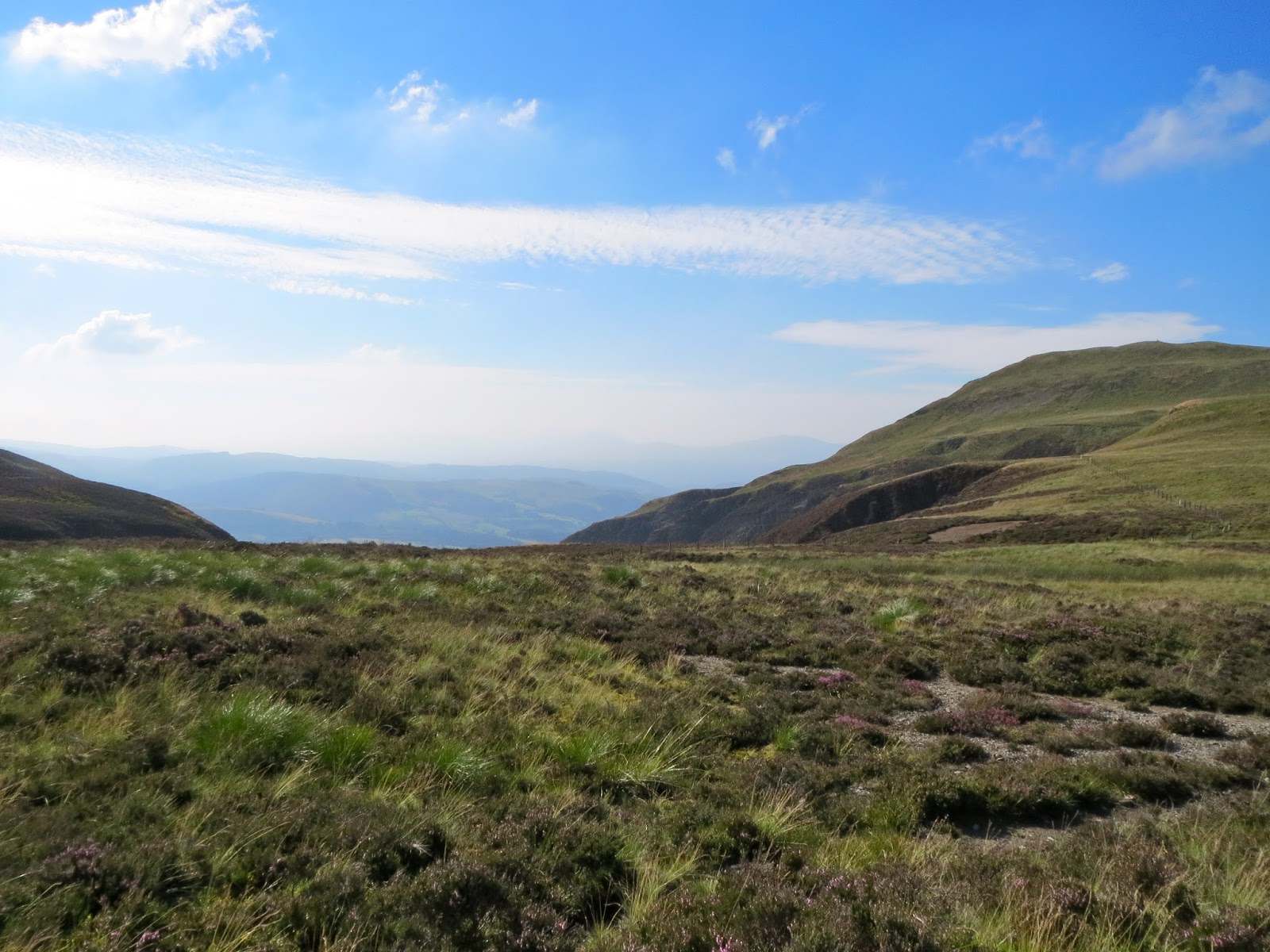
Revisiting the beautiful countryside of mid-Wales in August

The younger generation in my favourite lake,
where we used to go as children from as far back as I remember

Lifelong family friends at the holiday home we share

16 August 2013

JOLTINGS

One of the things I find most difficult is the collision between what sometimes feels like two completely separate worlds: the normal everyday mundane stuff, and the medical. A couple of weeks ago I spent a lovely few days in mid-Wales with old family friends, along with my sister and nephews, and although I was aware of feeling weary at times, overall I felt pretty normal. The bloating and poor appetite were better (helped by big communal meals so that I didn't have to spend time thinking about what I could face eating), but also everyone there knew about my situation so we didn't have to talk about it. I felt surrounded by caring compassionate people who have known me all my life, and that meant that we could just have normal conversations - including lots of joking and banter - and that was wonderful, really restorative. 

Then I returned to London and had my routine blood tests, and was immediately transported back into "patient" mode. My liver functioning, which had been deteriorating a bit, had declined further, and I was put on a course of steroids (the rationale being that my liver could be inflamed, possibly as a result of the radiotherapy which can disrupt blood chemistry for quite a while after treatment, and steroids reduce inflammation). My haemoglobin was also pretty low, so I had a blood transfusion at the end of last week. What with waiting for the blood tests results, waiting again for a prescription for the steroids, having to come back on another day to give a blood sample to match with the donor blood for the transfusion, and spending more than 5 hours having the transfusion itself, suddenly a large portion of my week was spent at the hospital. 

Sadly that's continued this week too: I've had bad bloating, distention and discomfort since last weekend, and follow-up blood tests showed that my liver functioning hasn't improved. The Marsden team were worried there could be some blockage and I had an urgent ultrasound scan. Urgent, by the way, means that they fitted me in the same day, but it meant waiting 3 hours for a slot and then another 2 hours before someone was free to give me the results. The waiting around is very stressful, as you don't even want to go and get a cup of tea or a sandwich in case you miss being called, and spending all day on uncomfortable plastic chairs is not great when you're in pain and feeling exhausted.


The ultrasound didn't show up anything obvious, and I'm very relieved by that, and thankful that they took it seriously and investigated, but I still don't have an explanation (or even any hypotheses from the medical team) for why my liver isn't working properly, and that's an incredibly scary position to be in: at one stage I was terrified that my liver might be about to pack up at any minute. Once again, that comes partly from the lack of continuity and communication - I very briefly saw my specialist nurse, who arranged the transfusions and set up both the ultrasound scan and a CT scan for tomorrow, but she only deals with the practical things, and the doctor she spoke to was (I think) whoever in the team happened to pick up the phone - certainly there was never any suggestion of me actually talking to a doctor in person. Later on a very junior on-call doctor told me that the ultrasound was inconclusive, but she clearly knew very little about my case, asking whether I was on chemo now and not appearing to know about the SIRT procedure in April, and that's very frustrating and doesn't really inspire confidence.

But I was conscious that alongside my worries about the blood results (why now? what's going on? what if this is the start of something serious?), I was also very upset by having my life taken over again (as it felt) by the reality of my health problems: having to drop my plans for the week to accommodate medical appointments, and needing to cancel a number of nice social things I'd been looking forward to because I felt too unwell. (I'm going back to Scotland to see the healer next week, and I've had to cancel my final session with him and change my flight home in order to be able to go to the clinic appointment for the scan results - not the end of the world, but a nuisance and extra admin all the same.) I guess it boils down to a control thing: it's felt like losing my autonomy and the illusion of being in charge of my life, and after a period without feeling defined by illness, it was a bitter blow to have to readjust again. It's tough having to put your life on hold, to relinquish whatever plans you had, to accept that the needs or crises of the body actually have total dominance over what we like to think of as our "free will".

I hope this doesn't sound as if I've got my priorities wrong: what I'm trying to convey is how I can be coasting along fairly comfortably, knowing what the week holds, doing normal things like seeing friends, going to appointments, shopping, doing admin etc, and then suddenly the cancer comes crashing abruptly in and takes over. It's also weird going back the other way and being in a "normal" social environment while trying to explain to other people what's been happening. 

So it helped enormously that my friend Catherine was with me on one of the longest Marsden days (putting all her own plans on hold to stay with me till I was allowed home, bless her), and that she witnessed something of these two slightly contradictory worlds. I guess when people see me socially it's easy to assume that I'm fairly alright, and that despite a few medical appointments I'm as in control of my destiny as anyone else - not many people see me in the enforced passive role of being a hospital patient, helpless in the face of the endless waiting of the system, and feeling like my life's been taken over. I don't like to dwell on those aspects of my existence, but it's certainly part of my reality, and one that I find very challenging, both in itself, and in the suddenness and unpredictability of switching between the two worlds.

However, the other thing which has really helped has been my alternative practitioners: once again, it's made a huge difference having people who actually know me and my history talking me through what might be going on, and having helpful suggestions about how to improve things. Both the alternative doctor and my osteopath believe I've been having an immune system overreaction to the blood transfusion, rather than a blockage or a build-up of fluid in the abdominal cavity (ascites) - which makes sense to me since I've had swollen glands and felt generally achy, as you do when your immune system is working hard - but, whether or not that's "true", having an explanation other than my google searches on end-stage liver failure has, not surprisingly, taken a lot of the fear away. In addition their treatments have eased the pain and reduced the swelling considerably. I don't mean to dismiss the expertise of the Marsden, but I'm very thankful to have a support network which means I don't have to rely solely on their somewhat patchy communication for making sense of what's going on in my body. I'm so lucky to have the money and education to make use of the different forms of care which are out there - it really makes a difference, especially in the tougher times.

29 July 2013

THANK YOU

I'd like to say a heartfelt thank you to all of you who responded so generously, sympathetically and warmly to my last update - in blog comments, emails, texts, cards, letters, on Facebook, and by sending flowers. I tried to reply individually to as many people as I could, but if I haven't been in touch with you directly, please know that I'm truly grateful to know there are so many people out there who care about me. 

I also really appreciate the offers of practical help as well, and I'm sorry that I don't really know what to suggest people can do. Although I do feel quite weary at times, and it can be a bit of a drag to do normal household chores and so on (as I'm sure everyone feels from time to time!), that's not really a problem: what's hard is dealing with things emotionally, keeping on top of all my appointments, making decisions, and holding it all together - and no-one else can really do those things for me. I realise it must be very frustrating for friends and family who desperately want to help by doing something concrete - but please know that (at the moment) the support I need is mostly to know that I'm thought about, and having people interested in what's happening with me, rather than having things done for me. 


So please don't underestimate the importance of simply getting in touch every once in a while (even better if I don't always have to reply!), as so many of you have done recently. 

However, on a more practical note, for those of you I see regularly: coming up with ideas of nice things to do, trips out and so on, would be wonderful, as when I'm feeling low in spirits or energy it can be difficult to think creatively, or even imagine what might feel fun. Plus it can feel a lot of effort to research or organise things, so having someone else take charge of the arrangements is even better. I hope that helps a bit.... 

I'm feeling a lot better now than I did when I last wrote. It's funny, I understood at the time that the news from the last scan wasn't particularly bad (certainly not as bad as some results or consultations I've had), but it kind of tipped me over into realising just how much effort it takes to hold things together emotionally, and how utterly exhausted I feel after more than two and a half years of keeping myself going, picking myself up each time I get knocked back, and trying to maintain a balance between a "normal life" and adjusting to a completely different way of relating to my body, my identity and my future. Definitely a case of the last straw breaking the camel's back (or at least resulting in the camel lying down and feeling unable to carry on for a while)...


Yet I think that's bound to happen every so often, and isn't necessarily a bad thing. In a way it's reassured me that I can have a period of feeling weepy and overwhelmed and unable to keep up my "normal" front, and still come out the other side and be able to carry on again afterwards - my default setting is being afraid that if I let my feelings fully come to the surface, I'll simply get swamped and never be able to recover, so this last fortnight has proved that that's not the case. I certainly feel more stable again, and am trying to make the most of that while it lasts.


14 July 2013

DIFFICULT NEWS

I'd been dreading the scan 3 months after the radiation procedure. Every scan I have is anxiety-provoking, but I was particularly worried this time as I've continued to have distention in my stomach, some gut discomfort, lack of interest in food, and I've felt weary and tired no matter how much I sleep. In addition I've had some backache and tenderness in my lower ribs (on both sides) which can make it hard to sleep. I assumed that this was due to enlargement of the liver putting pressure on my abdominal cavity, which I'd experienced in the run-up to my diagnosis, so I was fairly sure these were all ominous signs.

However, the feedback from the scan reports was that there had been some small growth in 2 areas of the liver, and some shrinkage in another area, meaning that the overall conclusion was that things are stable. What I hadn't been expecting at all was that there are a few spots in my lungs - all very small, but in this context they have to be viewed as most likely to be further metastases (secondary cancer tumours).

I was totally devastated by this. I'd read somewhere that when metastases are only in the liver it's unusual for them to spread to other organs (in comparison to, say, breast cancer, which once it spreads often appears in the liver, lungs and bones), so I'd assumed that progression to other organs was one thing I didn't need to worry about. It scares me hugely: I can't generally feel my liver, so although I know it's carrying a large burden of disease I'm not aware of it inside my body, but my lungs I feel and am conscious of with every breath - somehow I feel much more intimately connected to my lungs. The idea of them becoming increasingly affected is terrifying, and, despite my best efforts to rein in my fears, for a few days I couldn't get the image out of my head of choking and gasping to death, drowning in my own fluids. I've been very tearful since hearing these results, and also had a kind of heavy despair: a conviction that this is the beginning of the end. As you'll see later in this post, the medical view is (for once) less pessimistic, but this is what's been going on in my head. 

The other emotion that's hit hard is disappointment. A high proportion of people undergoing the radiation treatment have a good response (i.e. it stops further growth for a while or shrinks things), and I felt very unlucky to have had such an equivocal result. I'd also seen the healer in Scotland a couple of weeks before, and had come away feeling quite positive, yet these results left me wondering whether any treatment is ever going to work, given that every scan for a more than a year has shown deterioration. So it's shaken my faith and knocked me back in a big way.

However, the doctor assured me that lung metastases (if that's what they turn out to be) can often cause no problems or symptoms at all. He also, very tactfully, pointed out that the main area of concern is still the liver (i.e. I'm in much more danger from that than I am from a few lung lesions). He said that the full response to SIRT (the radiation treatment) can sometimes take more than 3 months to show (so it's possible there's some benefit still happening), and in any case the fact that overall it's stabilised the liver tumours would indicate that it had been successful. If the stability were to last for some time, then it might be possible to consider repeating the SIRT in the future (although if it doesn't continue beyond a few months, there'd be no point in repeating the procedure).

So the team's recommendation was to do nothing at the moment, but re-scan in another 3 months, to see if there's any change over time. If I have any problems or new symptoms in the meantime I can go in and be assessed, and if necessary the scans can be brought forward - they'll also monitor my blood counts and liver function during this period. If things get worse, they'll discuss whether there's any further treatment they can offer. (I'd been told clearly, several times, that there isn't anything further they can do, but I guess if there's more deterioration they might consider riskier treatments than they would have done previously, since the process is a balance of risks and benefits.) 

Overall I'm very relieved by the team's decision. I was frightened of being discharged and left without any medical back-up, so it's hugely reassuring to hear not only that I'm still very much under their system, but they're clearly thinking very carefully about my case and are planning to keep reviewing it. I was also afraid they'd suggest re-starting chemo, which of course I would have done if it had been urgent, but I'm incredibly relieved not to have to face more gruelling draining treatment when I still feel nowhere near recovered from the last lot. And although I'm still struggling to deal with the emotional fall-out from the news, I'm grateful to have 3 months to process it, adjust to it, and do what I can to improve my physical recovery.

On that note, I saw my alternative doctor recently and told him the latest developments, and he too reiterated that these lung lesions could very well not cause any problems. Unlike the Marsden, he believed that the damage from chemo and radiation could very well explain the ongoing sensitivity of my digestive system. He also had an explanation for my tender ribs: apparently chemo can prevent nutrients and minerals being properly absorbed into the bones, leading to an effect a bit like osteoporosis, and as new bone tissue is produced to replace the gaps, it can mean bones feel tender or painful. I don't know whether this is an accepted scientific theory, but it makes an enormous difference to have a non-threatening explanation; and now that I'm not terrified it's a sign of something sinister, I'm already a lot less bothered by it. 

The alternative doctor also suggested doing some high-dose vitamin treatment (by intravenous infusion) and has agreed to put together a programme for me. Again, I don't know how much difference this might make, if any, to the state of the cancer, but it's incredibly reassuring to have someone say, "OK, we can do x y z" rather than believing that there's nothing which can be done. 

So gradually I'm getting my head round it all. In a way, nothing much has changed, but the emotional roller-coaster is certainly the most challenging thing at the moment. I haven't told many people yet (partly because I haven't been able to talk about it without crying, which is very draining), and I'm sorry that hearing this news via the blog is a rather impersonal way of communicating, but I hope you'll understand that it makes things much easier for me than having to repeat it dozens of times. 

I know that there are lots of people who care about me, but this is a very lonely process, and it's fair to say that I'm quite low at the moment (I didn't even have the heart to search for any cartoons). So if you feel moved to express support via a blog comment, text, email or card, your thoughts and good wishes would be very very welcome. 

1 July 2013

ON MINDFULNESS

As I mentioned in my last post, last autumn I did an 8-week introductory course on mindfulness (though I missed one session when I was in hospital). I've just got back from a week in Scotland seeing the healer again, and made use of the peace and tranquillity up there to reflect on some of the ideas and concepts I've found useful, and the patterns I'm trying to change, so I thought I'd say a bit about mindfulness here. I'm sure I've interpreted some of it in my own idiosyncratic ways, so my apologies for misrepresenting it to any readers who know a lot more about it than I do!

The definition of mindfulness that we were given was: intentionally focusing attention on the present moment (i.e. not the past or the future) without judgement. I was initially rather underwhelmed by that, as a great deal of the time the present moment feels so mundane, or dull, or simply waiting for something more interesting or important to take place.


The early stages seemed very abstract, especially as the technique we were taught first was to focus on the breath, as this is something which can only, by definition, be happening in the present moment. At first I found it difficult to see how tracking each in-breath and out-breath would ever help me to deal with the fear, resentment, sadness and envy of healthy people which having cancer has produced in me. After all, it couldn't give me a guarantee of what was going to happen - or rather, a guarantee that everything will turn out OK - which is what I wanted more than anything else (and still do, to be honest).

However, I began to see that the discipline of focusing on the current moment, and bringing back my attention to it every time it wanders, has given me more awareness of just how busy and all-consuming my thoughts are (as indeed is the case for pretty much everyone). I also came to see that the vast majority of my most distressing thoughts are concerned with what I'm afraid might happen in the future ("what if?"), or railing against what's happening in the present ("it shouldn't be like this"). It's much more rare that what's happening right now is unbearable in itself - mostly it's the meaning I put on it. So, for example, if my stomach's inflamed and making it hard to get to sleep, or I walk up a flight of stairs and feel out of breath, those experiences might be uncomfortable, but what makes them properly disturbing is the panicky fear about what this might indicate or lead to ("surely this symptom should have stopped by now? it can't still be the chemo, what if the cancer's spreading into the stomach?" or "I can't even walk upstairs now, what if this is the beginning of the end? I can't imagine ever being fit enough to go skiing again, it's so unfair, and what's the point in being alive if I can't do the things I love?"). The thoughts about the present moment are what produces the emotional loading, not the moment itself. 

Of course, those thoughts and feelings are entirely natural and understandable, which is where the non-judgement part was a revelation for me. In the past I'd try to deal with those kinds of thoughts by trying to talk myself out of of feeling how I felt - perhaps by reasoning with myself as to why it was illogical to feel that way, or making a plan of how to change how I felt. Mostly though I'm in the habit of being much more critical and stern, telling myself how much worse off other people are and how lucky I am in comparison, or that I'm being silly and ridiculous to jump to such conclusions, or that I mustn't allow those negative attitudes any headspace because I should be thinking positively at all times and never giving up hope of a miracle. So then I'd not only be scared, sad or angry, but also frustrated and down on myself as well - not a great combination! I haven't managed to stop those thought processes, but at least some of the time now I can recognise them and detach myself to some extent so that I don't get so caught up in them.

Before I started the course I guess I'd had some vague notion that practising mindfulness would turn me into a totally serene individual who was never thrown off balance by anything, who never felt strong emotions, who accepted whatever life throws at them without trying to change it, and who always saw the silver lining in everything, no matter how bad (and who would probably be extremely irritating!). It took me a while to realise, with a mixture of disappointment and relief, that that's not at all the case. Instead, as I understand it, it's about accepting that whatever's happening right now is what's happening right now, and that's OK. I can still decide to explore different ways of looking at it, or taking steps to change what I can, but I can separate out (at least some of the time) what's happening from my thoughts and feelings about it. To go back to the examples I used earlier, when I'm feeling physically under par I've found it very grounding not to judge myself for how my body's feeling, but instead to remind myself: "I'm feeling x y z discomfort, and some anxiety about it, and that's just how things are right now". The physical experience is still the same, but it removes a great deal of the fretting and angsting about it, and about what might (or might not) be going to happen in the future. And that definitely opens up the possibility of noticing other things in the here and now which might be more pleasant, rewarding or satisfying.


Another key thing - which I've known about intellectually for a long time but have only recently started trying to incorporate into my thinking - is the idea of impermanence: that everything, good and bad, inevitably changes. Trying to cling onto the pleasurable times, and protesting and railing against the unpleasant things, are equally misguided. I've found this really helpful for trying not to get caught up in nostalgia for my pre-cancer life: I can complain about it all I like, and feel hard done by and tragic, but it's a waste of time and energy because the reality is that my life has changed - as everyone's does throughout their lifespan - and this is how things are now. And now is all we have - it's the only time there ever is. I don't have to like it, but accepting that this is how it is stops me (at least some of the time) from metaphorically banging my head against a brick wall and saying like a spoilt child, "but I don't want it to be like this!" It would certainly be a much more peaceful existence if I could let go of fighting against reality...

Of course, I still struggle with all this. Often it's only after a period of feeling stressed, upset, anxious or resentful that I can even remember any of these perspectives. And I'm rubbish at finding / making the time to practice - I procrastinate hugely, and come up with all kinds of reasons why it's not convenient to do some meditation now.


So, in spite of hoping for some dramatic epiphany where the meaning of life would suddenly fall into place, it's been much more subtle - yet still interesting and useful. Like good therapy, it offers a way of learning to observe yourself without slipping into unhelpful judgement and self-criticism, and I believe that's the space where learning, and creating new patterns, can take place. At least, I hope so!

22 June 2013

RECUPERATION IN GREECE

I had a very restful week at a small village on Lefkada, one of the Ionian islands between Kefalonia and Corfu. It's not one of the picture-postcard-pretty white and blue villages, as almost all the buildings were destroyed in an earthquake in the 1950s, but it was pleasant and laid-back, with lots of greenery.

Olive trees near my apartment


Heavily-laden lemon trees

Glorious bougainvillea
One of things I hate about being single is the problem of holidays - it's great when friends are around to go away with, but pretty much everyone I know has commitments to work and / or family, caring responsibilities, limited holiday leave, or stretched finances at the moment. In my 20s and early 30s when I was between relationships I'd happily go off backpacking on my own, since I was guaranteed to meet other backpackers, and in fact I had some of the most sociable times of my life when I was travelling. However after a certain age I simply didn't fit into that demographic any longer, plus as I've got older I'm no longer prepared to share dorm rooms and live on a meagre budget - I like the odd touches of luxury these days! 

So for a few years I went on half a dozen or so holidays with Explore Worldwide, a company specialising in small-group travel, and enjoyed the advantages of going to far-flung places (such as Central Asia, the Middle East and Africa) without the hassle of dealing with the bureaucracy, and with the company of like-minded people. However, Explore insist on full insurance cover - without proof of it they won't allow you to travel with them - so that's no longer an option for me while insurance companies won't cover anything cancer-related; plus right now I don't have the mental or physical energy to want anything too challenging (much as that pains me to admit). 

So I was very pleased to discover a small UK company called Serenity Retreats, which offers self-catering accommodation on Lefkada, along with optional meditation sessions each morning. There's also the option to do an introductory course on mindfulness, but since I did a very similar course last autumn I didn't sign up for that. It's designed for solo travellers who aren't looking to party all night, and you can do as much or as little as you like in terms of exploring the island or simply sunbathing on the beach. In the week I was there, there were only 3 other guests, and we all mainly did our own thing during the day but met up for dinner in the evenings. One day 3 of us went on a boat trip around the islands, which was a nice way to see a bit more of the area, and I also had a couple of massages. 


Our vessel for the day

Swimming spot off the boat

Other than that, since I was so tired, I did very little apart from the morning meditations, going to the beach, and reading copiously. I had a lovely apartment looking straight out over the sea, and although the weather wasn't as warm as usual for the time of year, with some cloudy days and windy spells, there was enough sun to bask in at least part of every day. The sea however was fairly cold so I only swam a few times.

Not sunny all the time.....


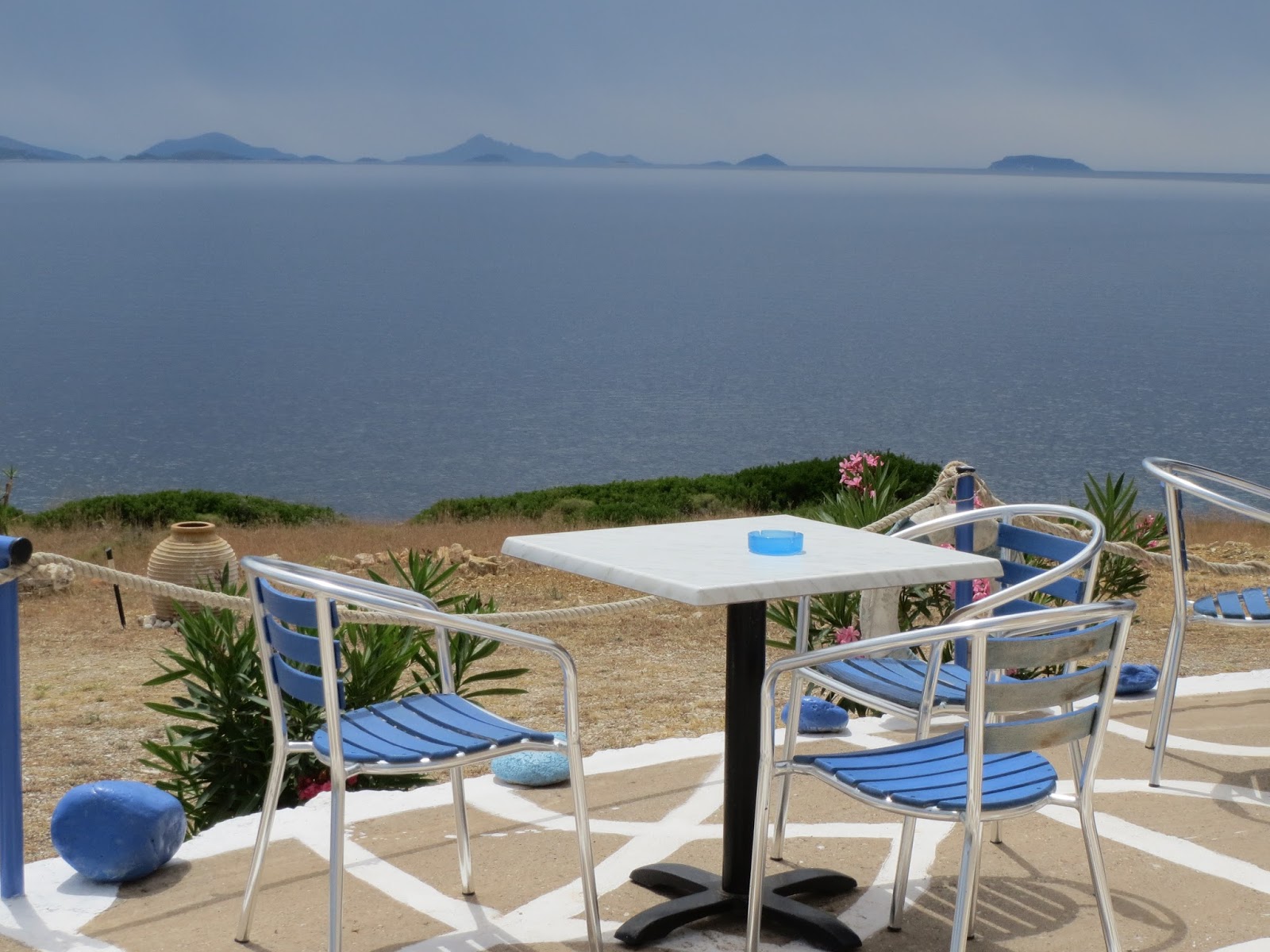
....but a wonderful view from my apartment


My local beach, as viewed from my verandah....

....and from close up

There was a bakery in the village and a few small supermarkets, a couple of cafes, and a reasonable number of tavernas along the harbour front. In peak season it's apparently full to bursting with Greek and Italian tourists, but in early June it was peaceful and tranquil.

Fishing boat delivering the catch of the day right to the taverna!

So it wasn't an exciting week, but it was definitely restful. Spending time on my own isn't something I struggle with, but equally it's not a treat for me - and it's hard to have "fun" on your own: that's generally a shared experience. All the same, I think it was good to have slowed down without having to feel guilty about not getting things done, or else worrying about my low energy levels. I came back feeling considerably better (and reassuringly recovered from the virus of the previous week), and have been really missing the beautiful intense colours and light of the Mediterranean.

Yet another irresistible shot of that beautiful view

Sunset over the bay

1 June 2013

OVERHAUL OF THE FLAT

Some of you will know that over the past couple of years I've been gradually working on improving my flat. It's long overdue, and now that I spend much more time at home I've come to realise how much my living space affects my mood. As these things tend to do, my ideas have snowballed, and I've ended up doing far more than I'd originally intended (as well as it taking substantially longer!) 

So far I've done a huge amount of clearing out, of cupboards, wardrobes and attic; I've set up my spare bedroom as an office space, which involved not only replacing furniture and restructuring my filing system but also fitting new sockets and internet access points, and while I was about it, replacing all the sockets and light switches; I've had mould treated and repainted with anti-fungal paint, and installed a positive air pressure pump to solve the condensation issues; I've re-insulated the entire roof and fitted new high-spec super-efficient double-glazing; I've had new shelves and cupboard doors made in the corridor and my bedroom; and I've reconfigured a lot of storage space to make better use of the limited square footage. 

However, since last autumn and the recent chemo regimen, I simply haven't had the physical or mental energy to make any progress, and the project ground to a total halt. Yet I've been constantly reminded of all the not-yet-done improvements when I see bare plaster, unpainted wood, boxes of correspondence and photos waiting to be labelled and organised, and new prints for the walls which I haven't yet put up. It's funny, after a while it seems like you stop noticing these things, but actually, even if I don't always consciously register it, it sparks off self-recriminatory "I ought to have dealt with that" or "I should sort that out", and I think it's been getting me down a lot, having constant reminders of "failure" - or at least, of daunting amounts still to be done. And there's so much choice available that despite spending many hours researching and thinking about the various options, for a long time I went round and round in circles, finding it very hard to decide what I wanted and how best to use the space I have. 


I'm always very impressed by people who are good at these kinds of projects, as it's definitely not something which comes naturally to me; and even though I've thrown out a huge amount over the past couple of years, I'm naturally a bit of a hoarder and, like for many people, letting go of things isn't easy. (I heard a wonderful definition of the difference between "stuff" and "junk": junk is stuff that you throw out, and stuff is junk that you keep!) 

Anyway, for all these reasons, I've been putting off all the smaller tasks until the flat's redecorated - which is logical, but made the whole project feel much bigger and more of an upheaval to get started on. Since procrastination has been such a feature of this process, I thought it warrants not one but two cartoons (well, actually, I couldn't decide between them, so you're getting both!)


However now, with the help and encouragement of some wonderful friends and my sisters, I'm finally on that final phase. As I type, the shelving in my living room is being replaced and extended, with built-in cupboards to hide away some of the clutter; the flat's being redecorated throughout, including painting the new MDF cupboards fitted last summer; I'm replacing the curtains in a couple of rooms (including  curtains which I grew up with in the family home all my life and which are older than I am - I loved them dearly, but it's now time to say goodbye to them!); I'm getting rid of some furniture which was too big for the space, and switching a junk-shop bedside cabinet with a nicer one; old faded lampshades are being replaced; a new mirror, shelf and towel ring will be installed to match the new vanity unit I had put in last winter; and new carpet's being laid throughout the flat. New prints and pictures will be hung, a few little repairs are being done, I'm changing the layout of my bedroom, and I'll be replacing my slightly threadbare towels and bedding. So it'll update both the cosmetic appearance, and the organisation and tidiness of all the storage systems, and should make an enormous difference.

That this is happening is largely down to my good friend Thea, who (amongst her other skills) runs a property management company and has loaned me her great team of builders / decorators, who are wonderfully taking care of all of this (under her watchful eye as project manager) to make the process as stress-free for me as possible. She and her colleague came and spent a day packing up all my books, clothes, photo albums, cupboard contents, and assorted oddments, labelling and storing them all neatly and efficiently - it would have taken me literally weeks to do that on my own, if I'd ever even have managed to summon the energy to start it at all! It's just fantastic to have such willing help and support, as well as expertise, and has made the whole process feel manageable and exciting again. (Although the plan to have a new kitchen put in will definitely be postponed for a while....)

However, it still involves a lot of work, dust and mess, so I've moved out for a couple of weeks, both so that the builders can have unimpeded access, and to spare me living in temporary chaos. 


I've spent a week staying with my sister Belinda and her family, who have been extremely welcoming and accommodating, and it's been lovely to spend some time with them. All the same, I don't want to impose for too long, and although over the last few weeks it's been exciting choosing paint colours, light fittings, carpet, coat hooks, curtain fabrics and rails, storage solutions, etc, it's also been fairly intense and at times a bit daunting. I squeezed in another trip to Scotland for a few days in May to see the healer again, and although the sessions were useful, it made me realise how how exhausted I still feel after the chemo and radiation, and how hard I find it to switch off mentally. So I decided to go away for the second week of the refurbishment, and chose the little-known Greek island of Lefkada to rest, relax and recharge. 

Unfortunately I've been quite unwell this week, with a nasty viral throat infection (I'm extremely grateful to Belinda for looking after me so wonderfully), and yet again it's been touch and go as to whether I'm fit to travel. I spent all day yesterday firstly at the GP (who told me I should cancel the trip), then having blood tests at Chelsea and Westminster, then going on to the Marsden for a second opinion, and finally getting the all-clear after talking to a very nice doctor there late yesterday afternoon. It's a horribly stressful roller-coaster: of course I want to be sure that I'm well enough to go away, and that I'm not putting myself at risk of becoming ill, but it's a risky business asking doctors, as if you're told you shouldn't go, you're then travelling against medical advice and you invalidate your insurance (not that any insurance will cover me for anything cancer-related anyway, so even if I'd cancelled I wouldn't have got any refund). So I'm incredibly relieved to have been given the green light, and am hugely looking forward to setting off this evening. 

I'm aware that there will be quite a lot of unpacking to do when I get home, as well as (I hope) some more throwing out of unneeded clutter, deciding where to hang all the new prints, re-storing things more efficiently and so on, but I hope that coming back to a nice new-looking flat and feeling refreshed from the holiday will make it not so much a chore as a rewarding and satisfying process. I'll only have occasional internet access in Greece (what a treat!) but will update you when I get back. Till then, I'm off to the sun - can't wait!