27 August 2012

A NEW TREATMENT REGIMEN

When I got back from Greece I had a meeting with a doctor at the Marsden. Once again it was someone I hadn't met before, but this time she was a consultant and instead of just feeding back the decision of the team (which was what mostly happened before) we had much more of a dialogue, which was great. She told me that the team had spent a long time thinking about and discussing my case, which was very reassuring - the disadvantage of any large hospital system is that it's harder to feel seen, let alone cared about, as an individual, so it was good to know that they do assess each case attentively.

I'd been told last year that there were no other chemo drugs suitable for my condition, so I'd braced myself to hear that there was no more treatment they could offer. All drug treatments, even once cancer has spread, are based on the organ where the original cancer cells are from, so the problem with cancer of unknown primary is that there's a degree of guesswork in finding the right drugs - and as it's a pretty rare condition there aren't many research trials to draw on. So it was a huge relief to hear that they've come up with a new combination of 2 drugs which target the whole upper gastro-intestinal system (liver, gall bladder, bile duct, pancreas etc.), and which therefore have a reasonable chance of being effective wherever my primary tumour is / was. 

It will be systemic chemo (i.e. given intravenously), like I had from December 2010 to June 2011. The chemoembolisations I had in Germany target a specific tumour, which is why the side-effects are fewer, but you can only treat one area at a time, so now, as I've now got several areas of growth (all in the liver still), that's no longer an appropriate intervention. Also, while cancer is growing there's a risk of micrometastases (migrating cancer cells) in the bloodstream, which is how it spreads from one organ to another, so I now need chemotherapy which will go through the bloodstream as well as the liver to try and eliminate or control that. The doctor explained their rationale very clearly, answering all my questions, and it makes perfect sense to me. 

So, after consulting with Dr Herzog and confirming that he's in favour of this too, I've cancelled my planned trip to Germany (I was due to go this week), and instead I'll start chemo at the Marsden next week. Previously I would have been sad to lose contact with the clinic and miss out on the support from other patients, but I'd found the travelling and disruption to my life was becoming more and more wearying, and I've now established a group of close friends from the clinic who I keep in email and phone contact with, so I feel well supported. Also, as I posted in July, I was already looking into alternatives, so I feel very ready for a change of rhythm. (I'll keep Dr Herzog updated though and would certainly consider going back again in the future if it seemed appropriate.)

I'll be on a combination of Capecitabine, which is taken in tablet form for 14 days on, 7 days off, and Oxaliplatin, which will be given intravenously once every 3 weeks. The plan is to do 4 cycles (providing I tolerate it OK), and then do a scan and review how things are going. This combination is apparently usually fairly well tolerated, but as with all chemo drugs there are a number of possible side-effects - some a nuisance, and some potentially very serious. To my relief I won't lose all my hair, but as with the previous drugs, thinning of the hair is possible. It was horrible having my hair falling out and becoming really thin last spring, and now that it's all grown back to its previous thickness and health, I'd be gutted to lose it again. But I'll have to wait and see. 

There can also be some neurological side-effects which cause tingling, pain or numbness in the fingers and feet. This is triggered by exposure to cold, so you have to use gloves to take things out of the fridge, and wrap up warmly in cold weather. Usually this peripheral neuropathy, as it's called, is temporary and stops after the end of treatment, but it can cause irreversible damage to the nerve endings. That would put an end to my violin-playing days, so I'm certainly going to be very careful (they'll also monitor me closely).

More rarely, there's a risk that the windpipe can go into spasm and make you temporarily unable to breathe or swallow - again, this is triggered by cold, so you have to avoid eating or drinking anything chilled. I'll have to become very organised and take things out of the fridge an hour or two before I need them so that they have time to reach room temperature - I'm sure it will be manageable, but will take a bit of adjusting to.

So although I'm very relieved that this is available, I was initially quite scared about starting full-on chemo again, with the unknowns of how it'll affect me (and whether it'll work). I haven't asked but I'm pretty sure the sensitivity to cold will rule out going skiing (even if I feel up to it - nausea, diarrhoea and fatigue are other common side-effects), and I've felt pretty gutted about that: after a year of feeling relatively well it's tough to face the limitations this regimen will impose, and accepting that I'll have to take things easy. 

However, after a week or so of worrying about how it's going to be, and feeling upset about all the things which could go wrong or be distressing, I've realised that I need to just take things a day at a time. It's not always easy to do, but I'm doing my best to focus on where I am right now, and deal with things when and as they come up rather than worry about them in advance. It feels more important than ever to enjoy things whenever possible, and alongside the bleaker stuff I've had some really nice times (including a friend's wedding, some Proms, and a lovely Bank Holiday weekend in Edinburgh with my friend Amy). 

So I'm in a much better headspace than I was, and now I'm keen to get started. I'll post again once the new regimen's underway to let you know how it's going!


22 August 2012

GREEK IDYLL

So with a bit of trepidation I went off on holiday to Greece, to Skyros, an island in the Aegean where holistic, creative and inspirational courses have been run from the Skyros Centre for 30 years (see http://www.skyros.com for more details).

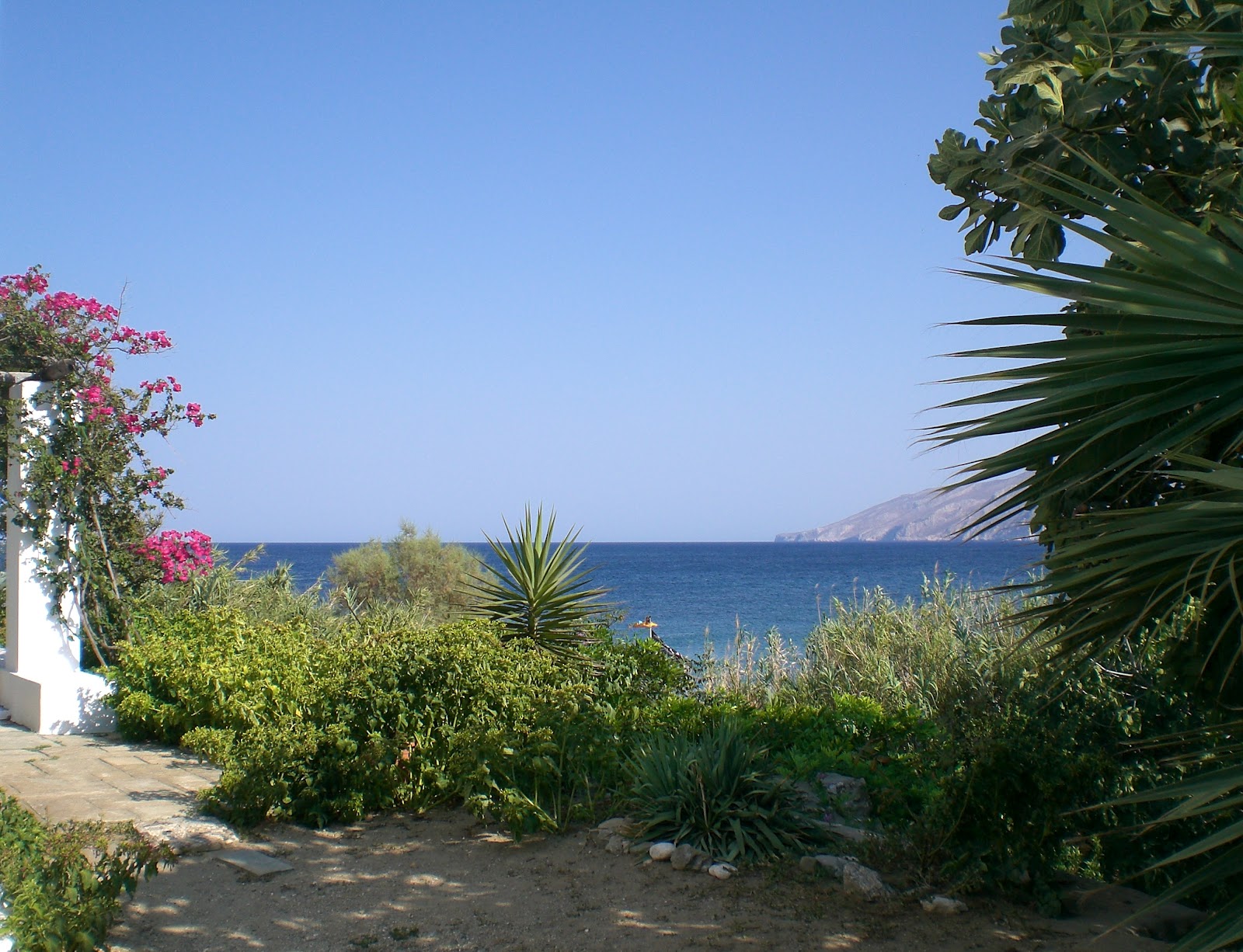
View from the terrace of the Skyros Centre

Skyros Town from the beach
I did a course on "Life Choices" over 10 days, which was essentially an experiential group, run from a Gestalt / psychodrama orientation. It was intense and challenging, but incredibly effective and powerful. It focused on helping us become aware of our patterns, particularly in how we relate and communicate, and although I thought I knew myself pretty well I found it extremely enlightening. I've always found it hard to ask for or accept help, hating feeling vulnerable or not in control, and not only did I gain new understandings of the underlying fears and how those patterns play out, I also discovered new ways of positioning myself which allow different kinds of interactions. Over the 10 days I felt some very significant shifts, especially about letting go of what's outside my control and allowing myself not to have to be strong all the time -  extremely relevant for the challenges I'm facing back at home.

Although we all confronted difficult emotions and it wasn't an easy ride, the group was a very safe and supportive environment, and as a result of sharing such intense experiences we bonded very closely. I was very moved by some of the connections I made, both within the group work and in more informal conversations socially. There was also a writing course running alongside, and both groups mixed and socialised together; there was a real sense of community, with shared goals of living more fully and satisfyingly. It was great being among like-minded people who were interested in going beyond the superficial - but alongside this we also had lots of fun!


I also went to classes in creativity, involving a wide range of exercises in thinking laterally and spontaneously, using music, movement, drawing, improvisation, and experimenting with voice and body posture. These classes were great fun, with lots of laughing and shedding of self-consciousness, but they were also very thought-provoking, and made a great adjunct to the group work. There was early-morning yoga available (which I only went to a couple of times, as I need a lot of sleep) and afternoon massages (which I did take advantage of, having 2 wonderfully therapeutic treatments). 

With all of this, plus daily meetings, a trip to the local museum, and going to another town for dinner one night, there wasn't as much free time as I'd expected, and at first I struggled with trying to make the most of everything on offer as well as making time to replenish my energy. But I soon found a balance which worked for me, and the days settled into a very enjoyable rhythm. After the group course in the morning I sometimes had a siesta or read in the cool of my air-con apartment; other days we went to the beach, or had long lunches, and discussed ourselves, our lives, our struggles and our hopes for the future. 

Entrance to my apartment

Lunch at the beach


The island itself was beautiful, and although the weather was extremely hot it did mean I had to slow down both physically and mentally. By the end I'd completely let go of my anxious city to-do list mentality, and found it much easier to focus on, and take pleasure in, the here-and-now (a skill which I'm continuing to practice). 


It wasn't what I'd call a relaxing holiday - it was far too stimulating for that - but I hadn't wanted something which was simply a nice distraction, so I was delighted to find that both the course and the interactions were substantial and profound. All in all it was an unexpectedly wonderful experience, in a very special place, and I've come home feeling quite wowed by it all. 

Leaving the port at sunrise

15 August 2012

CHALLENGING TIMES

After getting back from Germany I asked the Royal Marsden to compare my most recent scan from mid-July with the one done in January. I knew from Dr Herzog's feedback that there was a bit of deterioration, but I was shocked to discover that over these last 6 months there's actually been quite a lot of growth - in 3 areas of the liver, and 2 of those tumours doubling in size. It was devastating news and I took it hard, feeling extremely scared and overwhelmed. I've been lucky enough that since my diagnosis all the scans have been encouraging (showing small shrinkage or a stable condition), so this is the first time I've had to deal with bad news since the initial diagnosis. Back then I was so shocked and numb that I didn't really feel anything for several months, but this time I fully felt fear, in all its cold gripping visceral force - and it's a sensation which is pretty paralysing.

Initially the news also badly shook my faith in the German treatment - how cold they have not noticed the extent of the growth? and the fact that the chemoembolisations are no longer working? Chemo drugs, even when they're successful, will kill off only the cancer cells which are susceptible to that specific drug, and after that any cells which are left are those which are, or have become, resistant to it, so all drugs have a finite usefulness. I'd been told at the Marsden in spring 2011 that there are no second-line drugs for my condition, so I assumed that if the German treatment has done all it can, there was probably nothing further anyone could do. It was a pretty awful few days. On top of my fears about what the future might hold, I dreaded having to tell people that despite many recent comments about how well I was looking, actually things in my body were  falling apart. 

However I rang Dr Herzog, and he reassured me that the growth is likely to have been relatively gradual, a small amount each month, otherwise it would have been obvious to him and Professor Vogl, and that although clearly now a new treatment needs to be chosen, since my blood counts and general health are still good there's no need for panic. I realised then how I'd instantly assumed that I was about to fall very ill and might die within the next few weeks - perhaps an understandable reaction, but not necessarily accurate. Certainly almost everyone I've met with cancer has had treatments which work for a while, then they become no longer effective and a new regimen needs to be found - it doesn't necessarily mean the treatment has "failed" (or that the doctor's been negligent), it just reflects how cancer cells are always adapting and require new tactics for controlling them. Although of course deterioration can sometimes happen very quickly, more often it's quite a long process and there are many possible interventions along the way, even if they're all palliative. His understanding but very practical and undramatic manner helped me hugely by reminding me that although of course it's not good news, this is the nature of cancer, and going into "oh my God this is a catastrophe!" mode doesn't really help. 

I was due to go on holiday a day or two later, and had been on the point of cancelling it, terrified that I'd fall ill while I was away, or that even if there were any treatment options worth trying, by the time I got back it might be too late. However Dr Herzog told me that there was no reason to cancel the holiday, saying that I wasn't in any danger and a couple of weeks away wouldn't make any significant difference. Two of the nurses I spoke to at the Marsden when I was getting my blood tested said the same: have the holiday now before possibly starting new treatment (and while I'm still well) - after all, the whole point of trying to stay well is to be able to do nice things and enjoy life! So I arranged an appointment with the consultant at the Marsden to discuss treatment options as soon as I got back (I'll post again when I've worked out what the next step is), reined in the fear as best I could, and went ahead with the holiday. I'm so glad I did, as it was a wonderful break at a time when I badly needed something good in my life. See the next post for details!

19 July 2012

A YEAR OF CLINIC VISITS (AND MORE UPS AND DOWNS)

It's now a year since my first visit to the clinic in Germany. Dr Herzog never gave me a definite timescale or promised a time when I'd no longer need to come, and I've been in amazingly good health since starting treatment here, given the degree of disease in my liver. However between my last visit in May and this one I had some abdominal discomfort – never terribly bad, but lasting for 5 or 6 weeks – and my alternative practitioners at home thought it could be caused by a build-up of toxicity of chemotherapy. Chemo drugs have a long half-life, which means they can take months or even years to break down completely, and although I’m now on a low dose at long intervals, I’ve still had chemo in my body continuously since December 2010, so this seemed very plausible. They suggested I consider reducing the frequency of coming to Germany, and looking into other options.

So I researched laser therapies and radiotherapy treatments (as well as checking out yet more of the numerous "wonder treatments" that pop up all over the internet).


Although it felt a bit unsettling to contemplate losing the structure of coming to the clinic, it was also exciting to wonder whether there might be an alternative, and the possibility of a change or shake-up to my rather constricted routine of the past year. At the same time, I was also grappling with a fear that the discomfort I was experiencing might mean cancer was spreading into my intestines. So it was quite a stressful period running up to coming back here.

The good news is that there's no sign that the inflammation in my abdomen is linked to disease progression: Dr Herzog reckons it was most likely to be caused by some of the chemo drugs getting into the bloodstream supplying the intestines (which is very close to the main tumour area in my liver). He doesn’t think that chemo toxicity is likely to build up in any way which would indicate stopping or reducing the treatments.

The less good news is that feedback from the scans this time show a little growth in one area, though no change in most of the liver. On scans it can be quite difficult to compare like with like, especially with irregularly-shaped tumours like mine, so I'm trying not to react too much yet: I'll give a copy of the scan to the Royal Marsden and ask them to provide more detailed feedback and a comparison with the scan in January (which is the last one which used contrast dye). I'll also keep monitoring my blood counts and inform Dr Herzog if anything seems to be changing. One of the biggest challenges is that scans are always subject to different interpretations: Professor Vogl (the surgeon in Frankfurt) described the results as showing "no significant growth", but of course the Marsden's view of what's significant may be different. So although I don't want to panic, I don't feel comfortable trying to reassure myself that everything's fine - it's a tricky balance to strike.

Confusingly, in spite of the possible growth, overall both doctors are still very pleased with how well I’m doing – they call it “a small miracle” that things have remained basically stable for a year (which is hugely encouraging, but at the same time a bit scary that it's so unusual). However they were both adamant that we can’t reduce the frequency any further: the recommended interval is every 4 weeks, so they’re not prepared to risk leaving it any longer than 8 weeks between treatments, especially if there's growth (and nor am I).

So the plan is to come back in 2 months, and if all's still the same, do another chemoembolisation. Neither Dr Herzog nor Professor Vogl recommend laser treatment or radiotherapy for me at the moment - because of the size, shape and position of my tumours, and because of the risks of damage to healthy liver tissue which those procedures carry - so they would prefer to continue with chemoembolisation, the least invasive and safest treatment. However, if things deteriorated they would consider all options.

So it's felt a bit of a roller-coaster again - initially wondering whether the chemo was becoming unviable and looking into another treatment structure; then the disappointment of hearing that other treatments aren't appropriate for me and  trying to resign myself to ongoing, indefinite clinic visits (Dr Herzog has always told me to view my cancer as a chronic condition, which makes sense, but it's still hard to accept the limitations it involves); then finally hearing about this possible deterioration and (of course) perversely longing for things to be as they were before - and having to stop myself going into catastrophe mode. Added to all this I had 24 hours of diarrhoea after this chemoembolisation, which left me feeling physically washed out and sorry for myself, so all in all I had a pretty low couple of days.

If reading this leaves you confused as to what this all means - yes, that's pretty much where I'm at too! It's just not clear yet whether this is a minor blip; a discrepancy in measurement; a sign we need to try different chemo drugs; a sign that chemoembolisation is no longer effective; or the beginning of the end (if my inner doom-mongerer is to be believed - though to be honest I've stopped listening to it now, as it just gets in the way). Basically, we don't know yet what will happen, so it's a case of gathering more information / opinions and seeing what happens over time, and making any decisions once there's something more, or different, to base them on. (As it's been throughout, in fact.)

Yet despite the uncertainty I do know I’m extremely lucky to have no significant symptoms, no pain, and a treatment which has been working so well. The majority of people I've met in the clinic are having a harder time than me, so I know I need to appreciate the ways in which I'm lucky, to be grateful for the good parts of the news, and to make the best of things. But definitely some times that's easier than others! 


16 July 2012

MEDICAL NITTY-GRITTY

In this visit I had my ninth chemoembolisation. I realise I haven’t gone into much detail about this procedure so I thought I’d explain what it involves – I promise it's not too graphic!

In the morning a car from the clinic takes me the hour or so to Frankfurt’s University Hospital. I have to fast from the night before, so I try to avoid the breakfast room! When I arrive I pay for the procedure, then take the receipt to the Radiology reception and check in (in my fumbling German). 

I think a number of people are all booked for each timeslot so there can be a wait of up to an hour before I’m called and taken to a little cubicle to change into one of those horrible hospital gowns that leave your dignity entirely unprotected. A doctor comes round and checks for any changes to medical conditions, allergies or contraindications, and I sign a consent form. Then I wait to be called for an MRI scan, which, although not detailed enough to compare progress from one time to another, is what the Professor uses to plan his line of attack later.
I then wait again in the cubicle till I’m taken to the operating theatre, where I get hooked up to a drip containing saline (for hydration) and anti-sickness medication. My groin is liberally sprayed with cold (and bright orange) antiseptic, and a kind of surgical-blanket-with-a-hole-in-it is positioned over me so that just the inside top of my thigh is exposed (no space for modesty in this game!)

There can be quite a delay at this point, as there are at least 2 operating theatres on the go at any time, with Professor Vogl going between them (he carries out up to 18 of these procedures a day, impressively). Once he arrives it’s an efficient 10-15 minute process: he anaesthetises the top of my leg and inserts a canula into my femoral artery in the groin (it still hurts though!). With a scanning machine above me projecting my insides onto an LCD screen beside the table, he feeds 10 or 15 cm of thin tubing through the femoral, and then the hepatic, artery until it reaches the main tumour mass in the liver. A mixture of the three chemo drugs is injected in, along with steroids (these make me flushed and hot for a day or two afterwards and disrupt my sleep, but they prevent an allergic reaction to the drugs which can be fatal, so they’re non-negotiable!) I clearly feel the drugs going in – it’s a very weird sensation. Sometimes they burn or create momentary nausea, but it’s not too bad. The tubing is all removed, the wound is cauterised and dressed, and I’m transferred onto a bed.

I then have to lie still for 3-4 hours to prevent any bleeding (which, because an artery has been punctured, would be very serious). To be honest I generally feel pretty wiped out and it’s no hardship, except for getting stiff lying in the same position. As I’m flat on my back I can’t read, so I listen to music on my iPod. For some reason classical music is all I want – at the risk of sounding utterly pretentious, it feels like the interweaving of the different instruments, all responding to and balancing with each other to produce something greater than the sum of their parts, works as a kind of metaphor for coordination and healing in my body, as though aligning each organ and system into harmony with the others. Whether that’s the case or not, I find pop music a bit too jarring but classical pieces absorbing and soothing. Current favourites are Mozart’s Sinfonia Concertante, Schubert’s String Quintet in C, and Mendelssohn’s Octet.

After an hour I’m allowed to eat, and I nibble gingerly at whatever I’ve brought with me  – usually a protein bar from a health food shop or some almonds (the hospital doesn't provide any food, though once or twice I've been offered a packet of sweet biscuits). At the end of the 3 or 4 hours a nurse helps me up and I get dressed again (feeling a bit sore and creaky), and go back to the waiting room till I’m called for the CT scan. This is just to check that the embolisation material (which temporarily blocks the blood vessels in order to hold the chemo drugs in place a bit longer) has dispersed as it should - unless I specifically request it they don't use contrast dye, so the scans aren't very detailed in terms of charting the state of the disease. I do ask for a more detailed scan every few months, but it has to be specially authorised and takes quite a bit longer, so it's not ideal to do every time. 

Once the scan's over I wait to have a quick debrief with the Professor; then I wait for his secretary to type up a discharge summary and make a copy of the scans. If all’s gone to plan a driver from the clinic will by now have arrived to take me back – if not, there’s yet more waiting around.


So as you can see it’s a long day - typically leaving the clinic at around 10 a.m. and getting back between 7 and 8 p.m. I have some dinner at the clinic (I ask them in advance to keep some back for me in case I miss the official meal time) and then make my way back to the guesthouse and go straight to bed. By the next morning I generally feel lots better, with a reasonable appetite. After each treatment I have infusions (drips) of various remedies, to help the body detox from the chemo, and these seem to help a lot in recovering quickly. 

After so many of these procedures I’m getting better at dealing with the hanging around – burying myself in a book and avoiding looking at the time too often – but of course it’s pretty tiring, even without the impact of the intervention. I think I’ve tended to minimise it to people at home, describing it as "injecting chemo into the liver" - which is technically accurate, but definitely not the full story! It’s not an awful experience (in the grand scheme of unpleasant medical / surgical probings), but I’m always relieved when it’s over.

14 July 2012

TWO'S COMPANY


July, and yet another stay in Bad Salzhausen... The start of this visit was made much more pleasant by having my friend Mischa with me for the first couple of days. It was great having company to go to cafes, for walks, and into nearby Nidda, as well as sitting over breakfast chatting – at times it felt like being on holiday! 

Mischa in Nidda

Bridge and waterwheel in Nidda
However the main thing I valued was having someone see and experience, and understand, what it’s like here – the ups and downs, the frustrations, the camaraderie, the unique kinds of conversations that take place. Of course I’ve talked about clinic life to lots of people, but describing a place is never the same as experiencing it. (Another friend, Sharon, came to accompany me home from my first visit here, but unfortunately wasn't able to stay long; Jacqie came with me on my reconnaissance visit so knows what it all looks like; but Mischa is the first to get much of a feel for the rhythm of clinic life.) One thing she commented on was the amount of effort which goes into organising my care here - as an out-patient you have to chase up everything, from blood tests to infusions to making appointments to arranging for prescriptions of supplements, not to mention booking transport and guesthouse. So it was nice to have that acknowledged, and to realise that it’s no wonder I find it hard work at times!

In addition I found it extremely validating to have someone from home “bridge” these two worlds I inhabit. At home, because I look and seem fine, my friendships and relationships have mostly remained quite similar to how they’ve always been – we meet up, go for coffee or a meal, talk about what we’ve each been doing – and although of course I talk about my treatments, my dilemmas about the multitude of contradictory advice out there, and how I’m feeling, I’m still in the role of someone who’s “well” and (although no longer working) living a fairly “normal” life. I don’t in any way want to think of myself as “ill” (and I work strenuously to avoid taking up that role, including not asking for help), but when I’m at the clinic I  am of course a patient, and undergoing medical treatments, and am surrounded by people who, to varying degrees, are unwell, and our common ground is our unwellness. (The good and bad parts of being at the clinic both stem from being connected to other people through unwellness…)

And although I don’t want people at home to think of me as “ill”, at the same time it’s been quite strange having such a big part of my life somewhat invisible, out of sight here in Germany. So sharing that with someone from my London life felt very positive, and left me feeling quite buoyed up. 


 Out for a drink in Bad Salzhausen (alcohol-free beer is nearly as good as the real thing!)

30 June 2012

LOOKING INTO THE VOID

In alternative medicine I've encountered a strong belief, especially in relation to cancer, that a fighting spirit, a refusal to give up on life, leads to better outcomes. I'm certain there's some truth in that, and I do believe I can influence, to some extent, how long I live - although some of the positive-thinking brigade make it sound as though all unhappiness, suffering or death is caused solely by insufficient positive mental attitude, conveniently ignoring the fact that plenty of negative or fearful or miserable people live till old age, and that even the most positive people still have to die at some point. Since my diagnosis, despite believing that I hadn't long left (which was also the medical prognosis at the time), I haven't really allowed myself to think about death at all - partly it because it seems so abstract, and partly because all around me is this exhortation to be positive: from other patients, from cancer survivors' memoirs, from my therapists, from every book I read; and reinforced by friends and family congratulating me on how upbeat I seem (and desperately wanting me to be, or seem, alright). I know all of these are intended to be encouraging, and often the message "you can do it" is indeed inspiring and supportive; but at times it can be a huge pressure (oh no, not only am I feeling frustrated / resentful / low / stressed / self-pitying, but also I've failed to stay positive, and if I let negativity creep in it will make me more ill, and it'll be all my fault....)


And in the past year I've come to realise that at least some of my "positive attitude" is actually not positive at all but reflects a belief that it's terrifying and unthinkable to die, and that I mustn't ever allow it to happen to me. I've somehow slipped into viewing death as something to be staved off with willpower, which leaves me feeling almost totally responsible for keeping myself alive (ideally indefinitely). I guess it's a kind of superstitious belief, and since it demands constant vigilance it's exhausting. It's also quite scary (what if I'm not doing enough?), and it makes it hard to enjoy things (including being relatively well at the moment) in case I tempt fate by relaxing and thinking things are OK, and thus cause everything to go pear-shaped. And of course I'm setting myself up for failure, as - whether it's sooner or later, from cancer or something else - I will still die. (Obviously I've always known this intellectually, but I think I've been trying to convince myself that I can make sure it doesn't happen if only I eat the right food / do the right treatments / refuse to countenance the mere possibility....) 

Although this attitude has probably served me reasonably well up to now, it's pretty hard work, and probably isn't the best use of my mental energy, especially at the moment. So I decided it was time to plunge into the murkier bits of my psyche, and signed up for a weekend workshop exploring death and dying, with the aim of facing the fears, making some kind of peace with the fact that we're all finite beings, and hopefully becoming able to live without constantly worrying about whether I'm fending off death well enough. I found the workshop very helpful, and although naturally it was quite intense at times, and certainly brought up a lot of emotions, it was very clearly life-affirming: what I took from it was that by accepting the fact of death, and the impossibility of knowing when it may come, it should be possible to live with less anxiety about it. Similarly, by no longer fighting the fact that everything's impermanent, and wasting energy worrying how long it'll be till things change, it becomes easier to fully enjoy things while they last. I'm not there yet, but I'm perhaps a few steps closer! 


I also found it particularly helpful to remember that it's not just me who's facing this - yes, it may be that not many of my peers are thinking much about it right now, but being reminded that mortality is universal (not a tragedy which affects only poor little me) was something I found very reassuring and comforting. I think that being able to face doing the workshop at all was a significant step - previously I think I was afraid that if I accepted that death is inevitable (for us all), it would automatically mean giving up on life, or no longer seeing any point to living or fighting for health. (I've also found that people who care about me often have mixed feelings about me delving into this area, in case it's a sign of me "giving up hope" or in case it upsets me.) However I think it's probably more like the opposite - that acknowledging that death is natural and not a sign of failure allows one to embrace life more fully - and I found the weekend left me with quite a noticeable sense of relief. (The workshop's held a couple of times a year, so if anyone's interested in more details about it, let me know, or have a look at the website www.livinganddying.co.uk.)

I must admit I didn't tell many people exactly what the course was about - it felt not quite the thing to drop into social chitchat! - and I'm aware that it's not only me who finds death a difficult topic, so I'm sorry if this post is hard to read (though I'm guessing no-one reads this blog for light entertainment!) So I'll do my usual smoothing-over in order to finish on a more cheery note (of course with some nice pictures): the course was held in the far west of Cornwall, and having never been to that part of the country before I took the opportunity to rent a self-catering apartment and stay a couple of nights longer. I hired a car and spent a day exploring Lands End, Penzance and St Ives. I loved the feel of the place, wild yet peaceful, and it was great having a bit of time to process things and let them settle before going back into mundane life. 

View from my apartment over Cape Cornwall

The coastal walk just north of Lands End

St Ives harbour

Spectacular sunset (no metaphorical meaning intended!)